Affiliate disclosure: Fit For Your Dog may earn a commission from qualifying purchases made through certain links on this page, at no additional cost to you.
Research-based buying guide | FitForYourDog Editorial Team
Affiliate Disclosure: FitForYourDog may earn a commission from qualifying purchases through certain links, at no additional cost to you. Our recommendations are based on manufacturer information and published product documentation, not independent hands-on testing. Learn more in our How We Review policy.
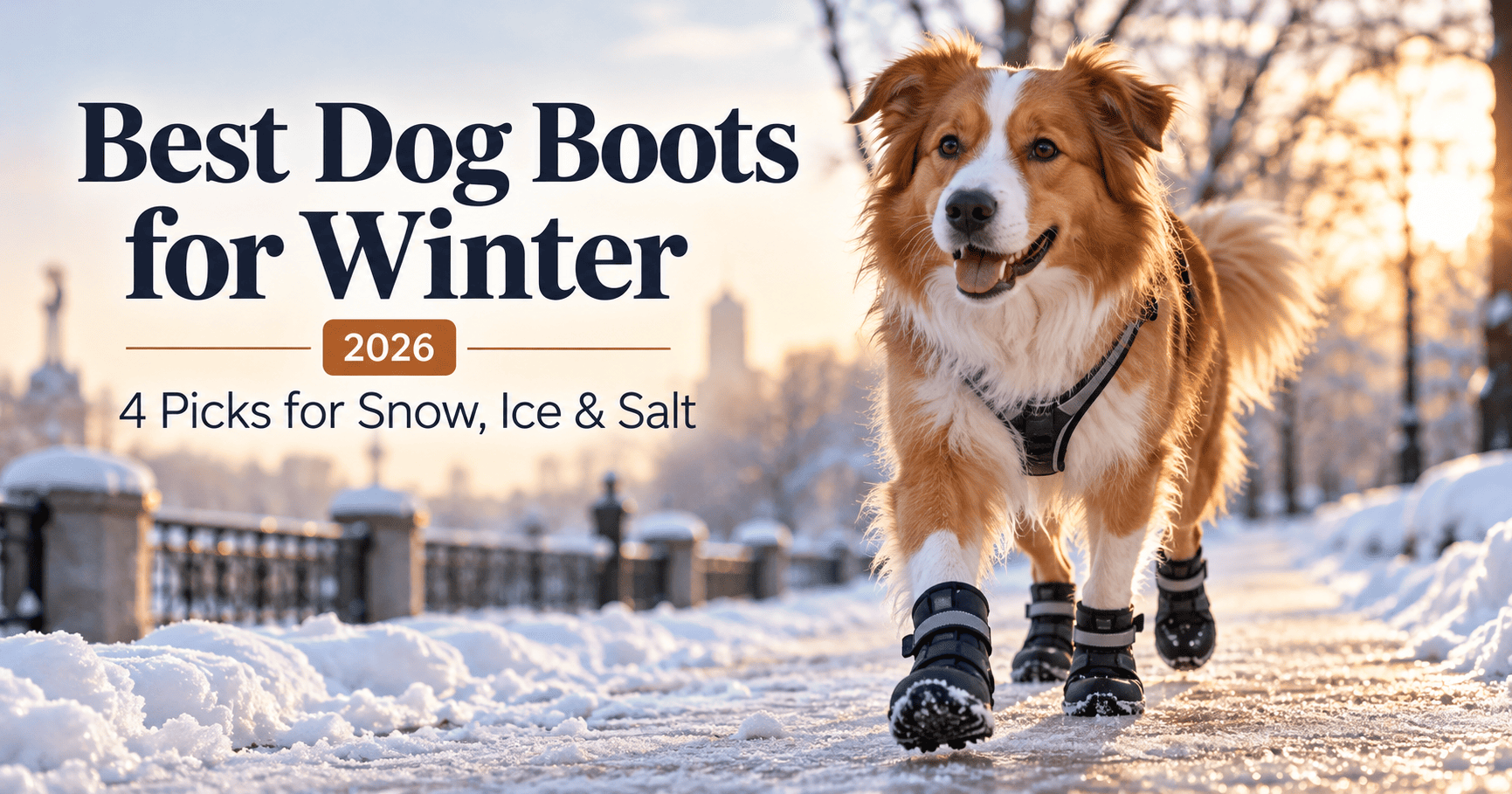
Winter walks can be challenging for dogs. Snow, ice, freezing pavement, and road salt can make outdoor adventures uncomfortable, especially for dogs with sensitive paws.
The right winter dog boots can provide a protective barrier while helping your dog enjoy everyday walks.
But not every boot is suitable for every situation. Some prioritize insulation and weather protection, while others focus on flexibility, durability, or traction.
In this guide, we compare four dog boots for winter in 2026, explain their advantages and limitations, and help you choose a comfortable, secure fit.
Quick Comparison: Our 4 Winter Dog Boot Picks
| Dog Boots | Best For | Main Advantage |
|---|---|---|
| Ruffwear Polar Trex | Snow and ice | Winter-specific protection |
| Ruffwear Summit Trex | Everyday winter walks | Versatile design |
| Muttluks Original Fleece-Lined | Cold-weather comfort | Fleece-lined construction |
| Ruffwear Grip Trex | Trails and rugged terrain | Durable, grippy outsole |
Quick verdict: Ruffwear Polar Trex is our preferred option for regular snowy and icy outings, while Summit Trex offers a more versatile choice for daily walks.
Our selections are editorial assessments of published specifications, not conclusions from controlled product testing.
1. Ruffwear Polar Trex — Best for Snow and Ice
Ruffwear Polar Trex boots are designed specifically for winter adventures.
Unlike ordinary dog shoes, these boots incorporate features intended to provide additional protection in snowy, icy, and cold environments.
What Makes Them Stand Out
Polar Trex boots feature a weather-protective softshell upper, an integrated gaiter, and a winter-oriented outsole.
The gaiter helps reduce snow entering around the upper portion of the boot.
Their specialized sole is designed to provide additional traction on winter surfaces, although no boot can completely eliminate the risk of slipping.
Advantages
- Designed for winter conditions.
- Weather-protective upper.
- Integrated gaiter helps limit snow entry.
- Specialized outsole for winter traction.
- Reflective details improve visibility.
Limitations
- More specialized than most dogs need in mild weather.
- Proper sizing and adjustment are essential.
- Sold in pairs, so check how many boots your order includes.
- The winter-specific outsole is intended for outdoor use.
Our Verdict
Choose Ruffwear Polar Trex if your dog frequently walks through snow or on icy surfaces.
These boots are especially worth considering for owners who regularly experience demanding winter conditions.
2. Ruffwear Summit Trex — Best for Everyday Winter Walks
Not every dog needs specialized snow boots.
For daily neighborhood walks, Ruffwear Summit Trex offers a versatile combination of protection, flexibility, and practical design.
What Makes Them Stand Out
Summit Trex features a weather-resistant upper, a flexible rubber outsole, and a hook-and-loop closure.
Its design makes it suitable for various outdoor surfaces, including sidewalks, rough pavement, and lightly snowy paths.
The boots can also be useful outside winter, particularly on abrasive terrain.
Advantages
- Versatile for everyday use.
- Flexible outsole.
- Weather-resistant upper.
- Adjustable closure.
- Reflective trim.
Limitations
- Not designed as a fully insulated snow boot.
- Weather-resistant does not necessarily mean waterproof.
- May be less suitable for prolonged exposure to deep snow.
- Requires careful sizing to prevent movement.
Our Verdict
Ruffwear Summit Trex is worth considering for owners who mainly need protection during ordinary walks on cold or treated sidewalks.
3. Muttluks Original Fleece-Lined — Best for Cold-Weather Comfort
Some dogs are particularly sensitive to cold surfaces.
For owners prioritizing a softer, fleece-lined design, the Muttluks Original Fleece-Lined boots offer a different approach from more technical outdoor footwear.
What Makes Them Stand Out
These boots focus on cold-weather paw coverage with fleece-lined construction.
They are worth considering when comfort and warmth are primary concerns rather than technical traction on difficult terrain.
Muttluks also provides detailed sizing guidance.
Advantages
- Fleece-lined design.
- Intended for cold-weather paw protection.
- Multiple sizes available.
- Alternative to more technical winter boots.
Limitations
- Correct fit is essential.
- Insulation does not guarantee slip resistance.
- Moisture protection depends on the specific product construction.
- Check current materials, closure specifications, and availability before buying.
Our Verdict
Muttluks Original Fleece-Lined boots are a useful option to research if your dog’s main need is comfortable cold-weather coverage.
Explore Muttluks Sizing Information
4. Ruffwear Grip Trex — Best for Rugged Winter Trails
For dogs that regularly explore trails, rocky paths, or uneven terrain, traction and abrasion protection may matter more than insulation alone.
Ruffwear Grip Trex is designed primarily for active outdoor use.
What Makes Them Stand Out
These boots feature a Vibram outsole and breathable upper material.
Their construction focuses on protecting paws on rugged surfaces while allowing greater flexibility than some specialized winter boots.
However, breathable mesh should not be confused with a fully weather-sealed winter design.
Advantages
- Durable outdoor-focused construction.
- Vibram outsole.
- Suitable for varied terrain.
- Breathable upper.
- Reflective details.
Limitations
- Not specifically designed for deep snow.
- Less insulation than dedicated winter boots.
- Breathable material may allow moisture exposure.
- Sold in pairs.
Our Verdict
Ruffwear Grip Trex makes sense for dogs that need paw protection on rocky or uneven trails.
For prolonged snow and ice exposure, a specialized winter boot may be more appropriate.
How to Choose the Best Winter Boots for Your Dog
Before purchasing dog boots, consider the conditions your dog regularly encounters.
1. Weather Conditions
For frequent snow and ice, look for boots designed for winter exposure.
For occasional cold-weather walks, versatile protective shoes may be sufficient.
2. Paw Size and Fit
A boot should fit securely without squeezing the paw.
Measure your dog’s paws according to the manufacturer’s instructions. Front paws and rear paws may require different sizes.
3. Traction
Examine the outsole design and intended terrain.
Remember that even a winter-oriented outsole cannot guarantee traction on every icy surface.
4. Comfort and Adjustment
Choose boots with secure closures and appropriate flexibility.
Introduce them gradually and watch your dog’s gait.
5. Cleaning and Maintenance
Winter footwear can collect salt, dirt, moisture, and grit.
Regular cleaning and drying help keep the boots comfortable for future use.
How to Measure Your Dog’s Paws
Follow these steps before ordering:
- Place your dog on a clean sheet of paper while standing naturally.
- Mark the widest points of the paw.
- Measure the distance between those marks.
- Repeat for the front and rear paws.
- Compare your measurements with the exact manufacturer’s size chart.
Avoid choosing boots based only on breed or body weight.
After fitting the boots, check for redness, rubbing, shifting, or changes in your dog’s normal walking pattern.
Do Dogs Really Need Winter Boots?
Not every dog needs boots during every winter walk.
Individual needs depend on temperature, breed, coat, activity, paw sensitivity, outdoor conditions, and exposure to de-icing products.
Some dogs tolerate short cold-weather walks comfortably, while others benefit from additional paw protection.
Boots can reduce direct contact with treated pavement, but they do not replace supervision or sensible decisions about outdoor conditions.
If your dog shows persistent limping, paw irritation, swelling, or signs of injury, contact your veterinarian.
Winter Dog Boots vs. Paw Balm
Dog boots and paw balm serve different purposes.
Dog boots provide a physical barrier against surfaces such as snow, rough pavement, and treated sidewalks.
Paw balm may help support paw-pad care, but it does not provide the same barrier or traction characteristics as protective footwear.
Neither approach guarantees complete protection.
For dogs regularly walking through heavily salted areas, well-fitting boots may be especially useful.
Frequently Asked Questions
What are the best dog boots for snow?
Winter-specific designs such as Ruffwear Polar Trex are worth considering because they incorporate weather-protective materials and specialized outsoles.
However, the best choice depends on your dog’s paw measurements, comfort, and walking conditions.
Can dog boots protect against road salt?
They can help reduce direct contact between paws and treated pavement. Remove accumulated residue from the boots and check your dog’s paws after walks.
How do I get my dog used to wearing boots?
Begin with short indoor sessions, allow your dog to move naturally, and reward calm behavior.
Gradually increase wear time before attempting longer outdoor walks.
Why do dog boots keep falling off?
Common causes include incorrect sizing, unsuitable closures, differences between front and rear paw measurements, or improper adjustment.
Are waterproof dog boots better for winter?
Waterproof construction can be helpful in wet conditions, but insulation, fit, flexibility, and traction also matter.
Choose based on the environment your dog will actually experience.
Can winter dog boots prevent slipping on ice?
No dog boot can guarantee slip prevention. Specialized winter outsoles may improve grip under certain conditions, but icy surfaces still require caution.
Final Verdict: Which Winter Dog Boots Should You Choose?
The best winter dog boots depend on your dog’s environment and individual needs.
Ruffwear Polar Trex is our preferred winter-specific option for snowy and icy outings.
Ruffwear Summit Trex provides a more versatile alternative for everyday walks.
Muttluks Original Fleece-Lined deserves consideration when cold-weather comfort is the priority.
Ruffwear Grip Trex is better suited to rugged terrain where abrasion protection and traction matter most.
Above all, measure your dog’s paws carefully, introduce boots gradually, and monitor comfort throughout each walk.
For more outdoor safety advice, explore our Dog Road Trip Checklist and Best GPS Trackers for Dogs guides.
Editorial note: This guide is based on research of publicly available product information. We have not conducted hands-on comparative testing. Product specifications, availability, and prices may change.