Affiliate disclosure: Fit For Your Dog may earn a commission from qualifying purchases made through certain links on this page, at no additional cost to you.
Editorial note: This guide is research-based and uses current travel-safety guidance from public-health and animal-welfare sources. Requirements can vary by state, destination, airline, and individual dog. For medical or anxiety concerns, talk with your veterinarian before travel. See How We Review.
A good dog road trip is mostly about preparation. The goal is not to pack every possible accessory—it is to make sure your dog is secure in the vehicle, easy to identify, comfortable at stops, and covered if something unexpected happens.
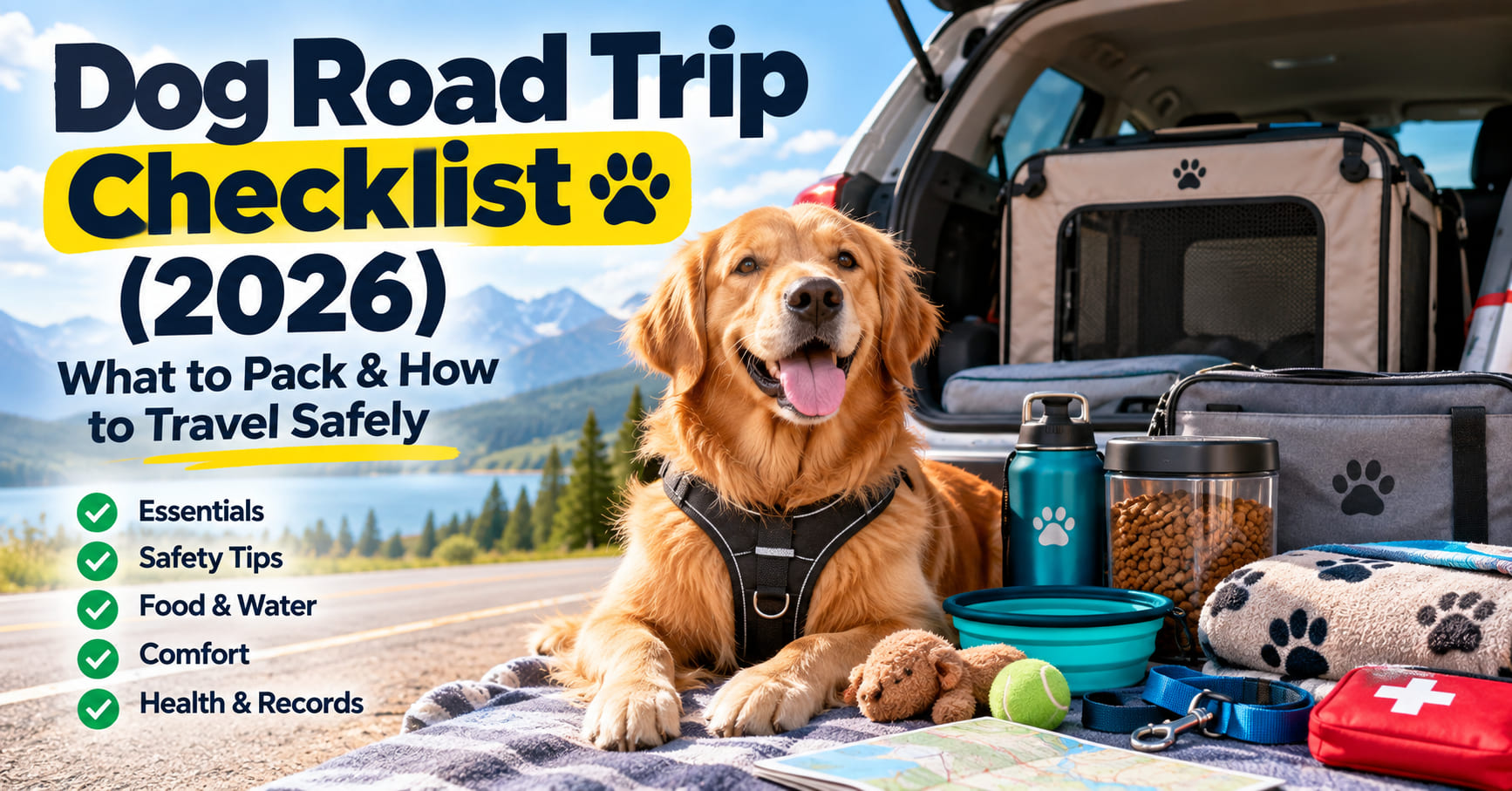
This 2026 dog road trip checklist focuses on the essentials: restraint, identification, food and water, medications, travel records, cleanup supplies, rest breaks, and a few comfort items that can make long drives easier.
Dog road trip checklist: quick version
1. Prepare your dog before a long drive
If your dog is not used to the car, a six-hour road trip should not be the first real test. Start with short rides and gradually increase the time. That lets you see how your dog handles motion, confinement, stops, and getting in and out of the vehicle.
Before the trip, also make sure your dog can be identified if separated from you. Keep the contact information on an ID tag and microchip current, and save a recent photo of your dog on your phone.
If you are crossing state lines or staying somewhere with pet-entry rules, check the requirements for your destination before leaving. Documentation rules can vary, and a vaccination or rabies record may be useful even when a formal certificate is not required.
Before-you-leave checklist:
- Take a few short practice drives.
- Check your dog’s collar or harness fit.
- Update the ID tag and microchip contact information.
- Save a recent photo of your dog.
- Confirm destination and lodging pet rules.
- Pack medications and veterinary information.
- Check whether any travel documentation is required.
2. Keep your dog secured in the vehicle
A dog should not roam freely through the car. A loose dog can distract the driver, be injured in a sudden stop, or escape when a door opens.
A well-ventilated crate or carrier should be large enough for your dog to stand, sit, lie down, and turn around. Secure the crate so it cannot slide or shift during normal driving or an abrupt stop.
If your dog rides on a seat instead of in a crate, keep them in the back seat with an appropriate restraint system rather than allowing free movement through the cabin. Avoid attaching a vehicle restraint directly to a neck collar.
Do not allow your dog to ride with their head outside the window. Flying debris, sudden stops, and escape risk make the habit much less harmless than it looks.
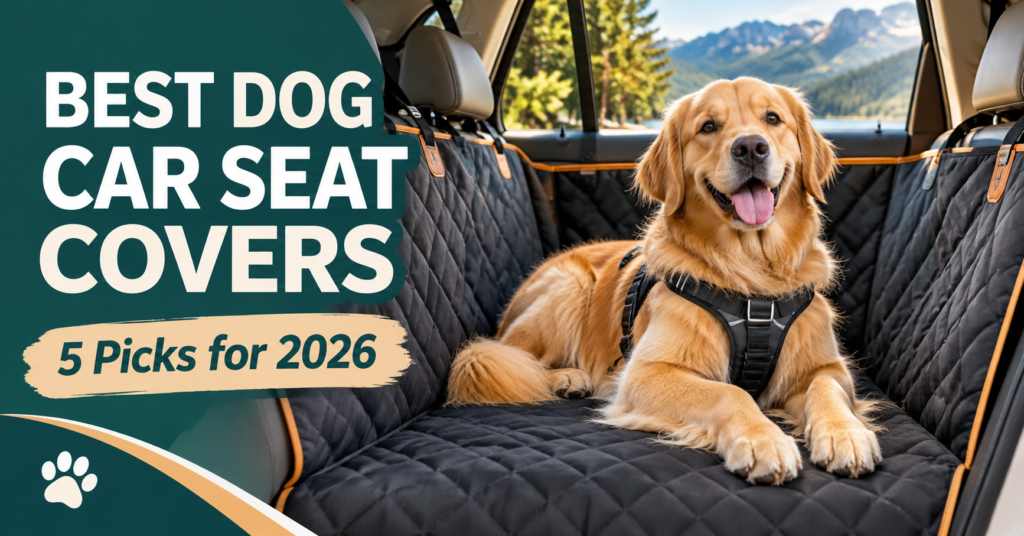
For easier cleanup after muddy hikes or long drives, a fitted seat protector can keep fur and dirt off your upholstery. Compare hammock and bench-style options in our guide to the best dog car seat covers. Remember: a seat cover protects your car’s interior; it does not replace an appropriate vehicle restraint for your dog.
3. Pack a dog travel kit you can actually reach
Do not bury everything your dog may need under suitcases. Keep one dedicated travel bag where you can reach it during stops.
| Category | What to pack | Why it matters |
|---|---|---|
| Food | Normal food, treats, measuring scoop or scale | Keeping the diet familiar can reduce unnecessary changes during travel. |
| Water | Water, travel bowl, backup bottle | Easy access makes hydration simpler at every stop. |
| Identification | ID tag, microchip details, recent photo | Helps if your dog becomes separated from you. |
| Health | Medication, records, vet contact, first-aid basics | Important if medication is delayed, lost, or an unexpected issue occurs. |
| Cleanup | Waste bags, paper towels, pet-safe wipes, old towel | Useful for accidents, muddy paws, spills, or motion sickness. |
| Comfort | Bed or blanket, favorite toy | Familiar smells and textures can make a new environment feel less strange. |
| Walking | Leash, harness, spare leash | A backup is useful if gear breaks or gets lost. |
4. Plan food and water around the drive
For dogs prone to motion sickness, a large meal immediately before driving can be a bad combination. Public travel-safety guidance commonly recommends feeding several hours before departure rather than feeding in a moving vehicle.
Bring your dog’s normal food instead of switching brands on the road. If you use an automatic feeder at home, do not assume you need to bring the whole setup—measured meal bags or containers may be simpler for travel.
Pack enough water for the drive and the first part of your stay. A collapsible or spill-resistant bowl can make rest stops much easier.
5. Schedule regular bathroom and stretch breaks
Long drives are easier when stops are planned instead of waiting until your dog is uncomfortable. Give your dog opportunities to relieve themselves, drink, and move around safely.
Always leash your dog before opening the vehicle door. Rest areas, gas stations, and parking lots are unfamiliar and often close to traffic.
For puppies, seniors, and dogs with medical conditions, the timing of breaks may need to be more frequent than for a healthy adult dog.
6. Never leave your dog alone in a parked car
This is one of the most important road-trip rules. Vehicle temperatures can become dangerous quickly, including on days that do not feel extremely hot outside. Cracking a window does not make a parked vehicle safe.
Cold weather can also become dangerous in a parked car. If a stop does not allow your dog to come with you, plan another option rather than leaving the dog unattended in the vehicle.
7. Choose pet-friendly stops and lodging before you leave
Do not assume every hotel, campground, rental, or restaurant patio that says “pet friendly” has the same rules. Some have weight limits, breed restrictions, pet fees, limits on the number of pets, or rules about leaving pets alone in the room.
Call or verify the current policy before departure. It is also useful to identify a veterinary clinic or emergency hospital near your destination, especially for longer trips.
When you arrive at a hotel or rental, scan the room before letting your dog explore. Check for medications, food, cleaning products, trash, loose objects, open balconies, or gaps where a small dog could get stuck.
8. Bring the right restraint for your dog’s size and behavior
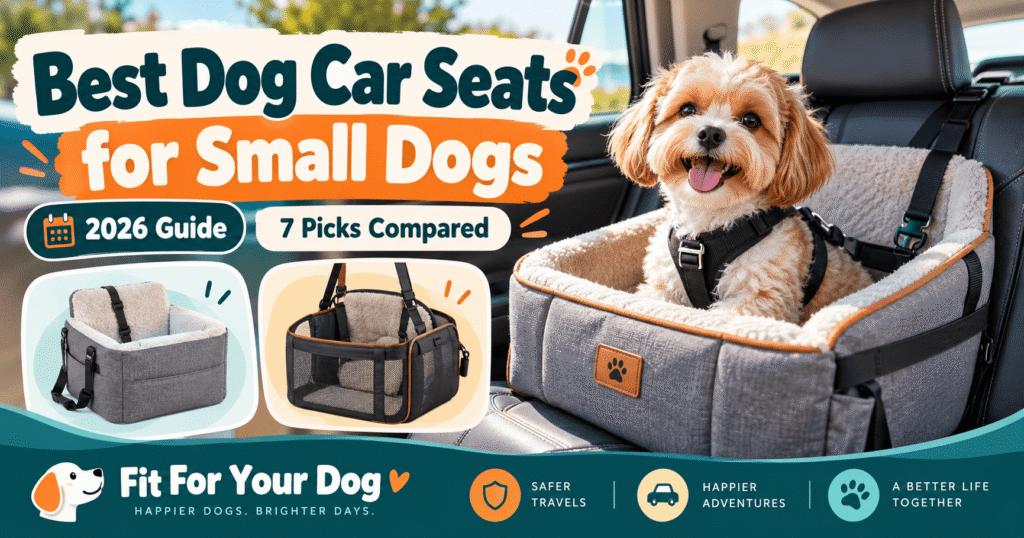
Travel gear should match the dog, not just the vehicle. A small dog may do well in a secured carrier, while a larger dog may require a properly sized crate or vehicle restraint system.
Also consider behavior. A dog who chews straps, panics in a crate, guards food, or tries to rush through doors needs a more deliberate setup than a dog who sleeps through every drive.
If you are buying a travel harness, crate, or carrier, check sizing carefully and follow the manufacturer’s installation instructions. “Fits dogs up to 70 lb” is not enough by itself—chest size, body length, crate dimensions, anchor location, and vehicle layout matter too.
9. What to do if your dog gets carsick or anxious
Some dogs drool, pant, whine, vomit, pace, or refuse to enter the car. Do not assume every symptom is “just nerves.” Motion sickness, pain, overheating, fear, and medical problems can look similar.
Start with short practice rides and a stable travel setup. If the problem is repeated or severe, talk with your veterinarian before a long trip. Do not give human motion-sickness medication, sedatives, calming supplements, or prescription drugs without veterinary guidance.
10. Make a simple emergency plan
You do not need a complicated binder. Keep the important information easy to access:
- your regular veterinarian’s phone number;
- an emergency veterinary clinic near your destination;
- a current medication list;
- your dog’s vaccination and rabies information when relevant;
- microchip number and registry information;
- a recent photo;
- an emergency contact who knows your dog.
If your dog has a chronic condition, ask your veterinarian what information or medication should travel with you.
If your dog is prone to slipping out of a collar or bolting at unfamiliar stops, a tracker may provide an additional way to locate them. Before relying on one for travel, check cellular coverage and subscription requirements in our guide to GPS dog trackers. A tracker is a backup, not a substitute for a leash, identification tag, or updated microchip.
Road trip packing checklist by dog type
Puppies
- Extra waste bags and cleanup supplies
- More frequent bathroom breaks
- Chew-safe comfort item
- Current vaccination information
- Secure crate or carrier
Senior dogs
- Medication and dosing schedule
- Supportive bedding
- Non-slip surface for getting in and out
- More frequent rest breaks
- Ramp or step support if normally needed
Small dogs
- Secure carrier or appropriately sized restraint
- Warm layer if the destination is cool
- Small travel bowl
- Extra attention around vehicle doors and busy rest areas
Large dogs
- Vehicle space planned before packing luggage
- Large enough crate or restraint system
- Extra water
- Large towel or bedding
- Easy access to safe walking areas at stops
What not to rely on during a dog road trip
- A cracked window: it does not make a parked car safe.
- A loose collar as a seat restraint: vehicle restraint should not concentrate crash force on the neck.
- GPS as a substitute for identification: trackers are useful, but an ID tag and updated microchip still matter.
- A feeder as a substitute for supervision: automated feeding does not make it appropriate to leave a dog alone for an excessive period.
- A new calming product tried for the first time on departure day: test routines and discuss medical options with your veterinarian in advance.
Related Fit For Your Dog guides
- Best GPS Trackers for Dogs (2026)
- Fi vs Tractive vs Petcube (2026)
- Puppy Essentials Checklist (2026)
- Best Orthopedic Dog Beds for Senior Dogs (2026)
- How We Review
Frequently asked questions
How often should I stop on a road trip with my dog?
There is no single interval that fits every dog. Puppies, seniors, dogs with medical conditions, and dogs new to car travel may need more frequent stops. Plan regular bathroom, water, and movement breaks and adjust based on your dog’s needs.
Should my dog ride in the front or back seat?
The back seat or a properly secured cargo-area crate is generally the safer location. A dog should not ride loose in the front passenger area, where driver distraction and airbag risk are greater.
Can my dog ride with their head out the window?
It is better not to. Debris, sudden stops, escape risk, and loss of control make it safer to keep the dog secured inside the vehicle.
Should I feed my dog before a long drive?
A large meal immediately before or during a drive may worsen nausea for some dogs. Travel guidance commonly suggests feeding several hours before departure. Dogs with diabetes, medication schedules, or other medical needs may require a different plan from their veterinarian.
Do I need my dog’s vaccination records for a road trip?
Requirements vary by destination and route. Keep current rabies and vaccination information available and check state, lodging, event, campground, and border requirements before travel.
Final road trip checklist
- Dog secured in crate, carrier, or appropriate vehicle restraint
- ID tag and microchip information current
- Food and water packed
- Leash plus backup leash
- Waste bags and cleanup supplies
- Medication and health records
- Comfort item or bedding
- Planned rest stops
- Pet-friendly lodging confirmed
- Emergency veterinarian identified near destination
Best rule: plan the trip around your dog’s safety and comfort—not around how long the car can keep moving without stopping.
Sources & update notes
This guide was researched and updated for 2026 using current public travel-safety guidance. Rules and requirements can change, so verify destination-specific requirements before departure.
Safety note: This article provides general travel information and is not veterinary advice. Talk with your veterinarian before travel if your dog has a medical condition, significant anxiety, motion sickness, medication needs, or a history of heat-related illness.