Affiliate disclosure: Fit For Your Dog may earn a commission from qualifying purchases made through certain links on this page, at no additional cost to you.
Affiliate disclosure: This post may contain affiliate links. If you buy through an eligible link, Fit For Your Dog may earn a commission at no extra cost to you. See our Affiliate Disclosure.
Editorial note: This guide compares feeding formats, not individual medical diets. We reviewed current AAFCO guidance, FDA food-safety information, WSAVA nutrition guidance, and current fresh-food pricing examples. We do not assume that “fresh” is automatically healthier than kibble. Read more about our process on How We Review.
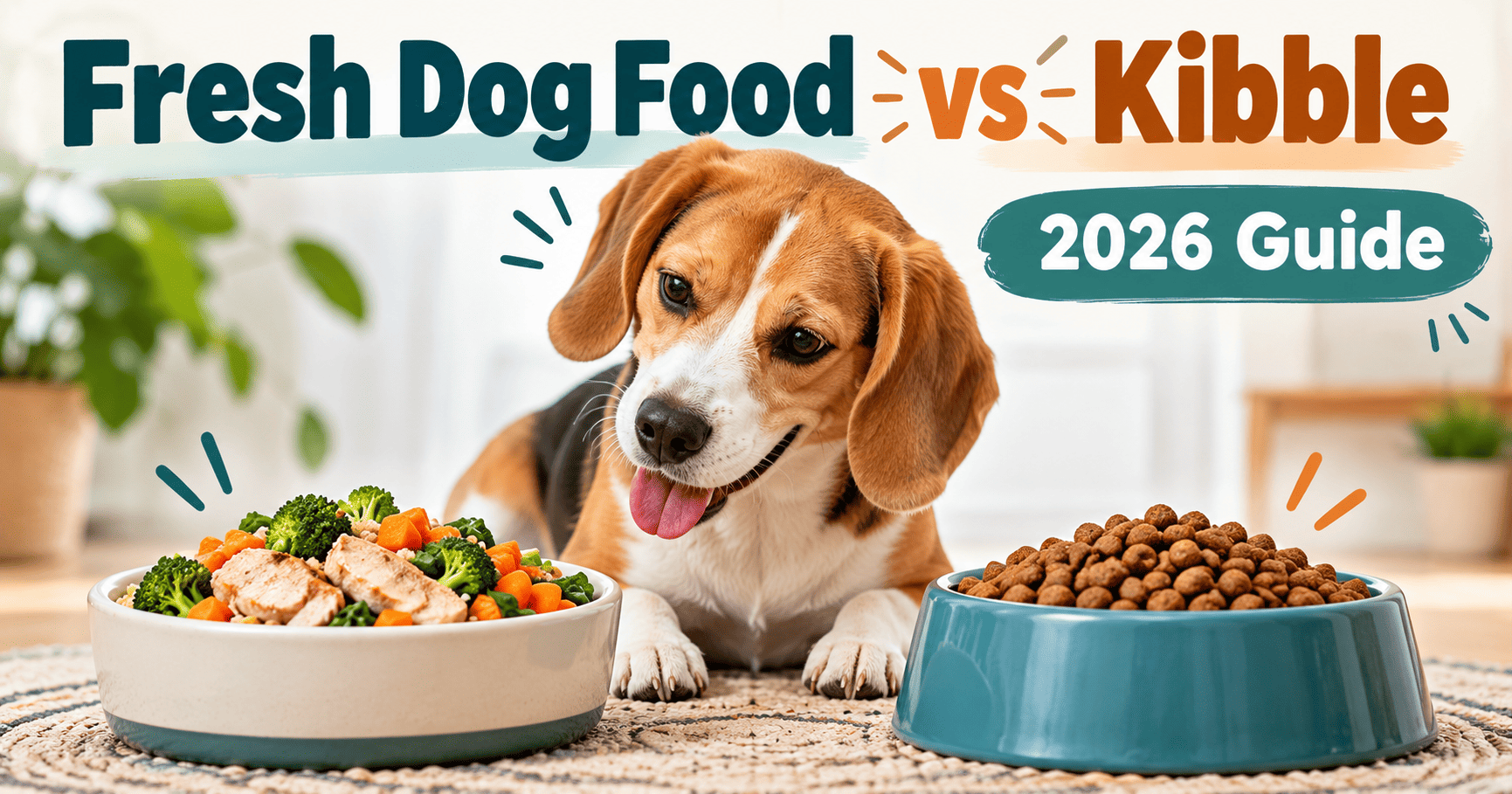
Fresh dog food vs kibble is often framed like a simple contest: fresh looks more like human food, while kibble is cheaper and easier to store. In reality, the better choice depends on whether the food is nutritionally complete, how well it fits your dog’s calorie needs, your budget, storage space, routine, and any medical requirements.
The most important point is this: the format alone does not tell you whether a dog food is nutritionally appropriate. A refrigerated fresh diet can be incomplete, and a dry kibble can be complete and balanced. The label, formulation, feeding directions, calorie content, and your dog’s response matter more than whether the food comes from a refrigerator or a bag.
Fresh dog food vs kibble: quick answer
Fresh dog food vs kibble comparison
| Factor | Fresh dog food | Kibble |
|---|---|---|
| Typical cost | Usually higher; subscription pricing varies with dog size, calories and recipe | Usually lower per day and easier to buy in bulk |
| Moisture | High | Low |
| Storage | Refrigeration/freezer space usually required | Cool, dry storage |
| Convenience | Often pre-portioned but requires cold-chain handling | Easy to scoop, travel with and use in automatic feeders |
| Nutritional adequacy | Can be complete and balanced if properly formulated | Can be complete and balanced if properly formulated |
| Calorie density | Usually lower per gram because of water | Usually more calorie-dense by weight |
| Palatability | Often appealing to picky dogs, but individual preference varies | Varies by recipe and dog |
| Travel | Requires temperature planning | Much simpler for road trips and boarding |
| Best fit | Owners prioritizing fresh texture, moisture and portioned delivery | Owners prioritizing budget, simplicity and storage |
What counts as “fresh dog food”?
In this guide, fresh dog food means cooked, refrigerated or frozen dog food designed to be served as a meal. That includes subscription services such as The Farmer’s Dog and Ollie as well as other commercially prepared fresh diets.
Fresh food is not the same thing as raw food. Raw diets have a different food-safety profile, and the FDA warns that raw pet food is more likely than processed pet food to contain harmful bacteria such as Salmonella and Listeria. This comparison is about cooked fresh food versus dry kibble, not raw feeding.
It is also important to separate commercial fresh food from homemade recipes. AAFCO notes that formulating a complete homemade diet is complex because dogs require many nutrients in specific amounts and ratios. A recipe made from chicken, rice and vegetables may look wholesome but still be nutritionally incomplete.
Nutrition: fresh is not automatically better than kibble
When comparing two foods, the first thing to look for is the nutritional adequacy statement. AAFCO describes this as one of the most important parts of a pet food label because it tells you whether a product is intended to provide complete and balanced nutrition and for which life stage.
“Complete” means the diet supplies all required nutrients. “Balanced” means those nutrients are present in the correct proportions. Recognized life stages include growth, adult maintenance, gestation/lactation, and all life stages.
That means a bag of kibble that meets the appropriate nutritional standard can be a sound everyday diet, and a fresh food can also be a sound everyday diet if it is properly formulated. Appearance and ingredient marketing are not substitutes for nutritional adequacy.
If you want to understand these statements in more detail, see our guide to how to read a dog food label.
Does fresh dog food have more nutrients?
You cannot reliably answer that by looking at the food format alone. Fresh food contains much more water than kibble, so percentages on the guaranteed analysis can look lower even when the nutrient concentration is appropriate.
For example, comparing “10% protein” in a high-moisture fresh food with “25% protein” in kibble is not an apples-to-apples comparison. Moisture changes the denominator. For a technical comparison, nutrients can be converted to a dry-matter basis.
The bigger practical question is whether the diet provides the right nutrients and calories for the individual dog. A diet can be made from appealing ingredients and still be poorly balanced if formulation is weak.
Cost: how much more does fresh dog food cost?
Fresh delivery is usually more expensive than dry kibble because you are paying for higher-moisture food, refrigerated or frozen shipping, portioning, packaging, and a more complex cold chain.
Current brand pricing also shows how strongly dog size affects cost. The Farmer’s Dog states that plans start at about $2 per day, with the exact price depending on age, weight, activity, recipe and calorie needs. Ollie currently lists a full fresh plan at about $22 per week for a 6-pound Chihuahua, around $55 per week for a 45-pound Australian Shepherd, and around $69 per week for a 70-pound German Shepherd. These are brand examples, not universal market averages, and prices can change.
Kibble is generally less expensive, especially for medium and large dogs. But comparing only package prices can be misleading because foods differ in calories per cup or per gram.
A better way to compare cost
Compare what it costs to feed your dog for one day.
For kibble: calculate the package price divided by the number of feeding days you actually get from the bag.
For fresh: divide the subscription or box cost by the number of days it feeds your dog.
Best comparison: use your dog’s actual daily calorie target and the food’s calorie content rather than comparing bag weight with box weight.
A small dog may have a manageable fresh-food budget because it eats relatively few calories. For a large or very active dog, the cost gap can become much more noticeable.
Convenience: kibble wins on simplicity
Dry food remains difficult to beat for convenience. You can store it in a cool, dry place, measure it quickly, use it in puzzle toys and many automatic feeders, and pack it for travel without refrigeration. If scheduled feeding is part of your routine, see our guide to the best automatic dog feeders.
The FDA recommends keeping dry food in its original bag, ideally inside a clean storage container, because the original packaging preserves lot numbers and product information in case of a recall or complaint. Dry food should be kept in a cool, dry location.
Fresh food can still be convenient in a different way. Many subscription services ship pre-portioned packs based on a dog profile, reducing daily measuring. The trade-off is refrigerator and freezer space plus the need to keep the food cold.
For frequent travelers, campers, boarding situations, or owners with limited freezer space, kibble is usually simpler. For planning meals, water, records and gear on longer drives, see our dog road trip checklist.
Food safety and storage
Fresh food requires more attention to temperature and leftovers. The FDA recommends promptly refrigerating or discarding unused moist pet food and keeping the refrigerator at 40°F (4°C) or below.
Regardless of format, wash your hands before and after handling pet food, clean bowls and measuring utensils regularly, and discard spoiled food.
Kibble is not sterile and still needs good handling. Keep bags dry, avoid heat and humidity, and clean storage containers between bags rather than continually topping off old food with new food.
Which is better for picky dogs?
Fresh food can be attractive to some picky dogs because of its aroma, soft texture and moisture. But “picky eater” is not a nutritional diagnosis, and not every dog prefers fresh food.
If a dog suddenly stops eating a food it previously enjoyed, especially with vomiting, diarrhea, weight loss, lethargy or other symptoms, talk with your veterinarian instead of simply switching brands repeatedly.
For a healthy dog that is simply selective, texture, temperature, feeding routine and treat intake can all influence appetite.
Which is better for weight management?
Either format can work for weight management if calories are controlled correctly. The critical variable is not whether the food is fresh or dry; it is how many calories the dog actually consumes relative to its needs.
Fresh plans can make portioning easier when packs are pre-measured, while kibble can be easy to overpour if portions are estimated by eye. On the other hand, kibble is simple to weigh precisely on a kitchen scale.
AAFCO notes that feeding directions are starting guidelines and may need adjustment based on the individual animal’s activity and body condition.
For more context on matching intake to activity, see How Much Exercise Does a Dog Need?
Fresh food may help with hydration—but it is not a medical treatment
Because cooked fresh diets contain much more water than kibble, they contribute more moisture through meals. That can be useful for dogs that naturally drink less water, but it does not mean fresh food treats urinary, kidney, digestive or other medical conditions.
Dogs with diagnosed disease may need a therapeutic diet with specific nutrient targets. In those cases, the veterinarian’s nutritional requirements should come before food format preferences.
Can you mix fresh food and kibble?
Yes, but the nutritional details matter.
If both foods are complete and balanced for the same appropriate life stage, a mixed feeding plan can be workable when total calories are controlled. Some owners use this approach to reduce the cost of a full fresh plan.
If the fresh component is only a topper and is labeled for intermittent or supplemental feeding, it should not displace a large share of a complete diet. WSAVA guidance notes that complementary or intermittent foods should generally make up only a small portion of the overall diet unless used under professional guidance.
When mixing foods, calculate the total daily calories rather than simply adding fresh food on top of the dog’s normal kibble portion.
What should you look for in a fresh dog food company?
Do not choose a company only because the meals look appetizing. Ask the same nutrition questions you would ask of a kibble manufacturer.
- Is the food complete and balanced for your dog’s life stage?
- Who formulates the recipes, and what are their qualifications?
- Can the company provide calorie information and detailed nutrient analysis?
- Who manufactures the food?
- What food-safety and quality-control procedures are used?
- How should the food be stored after delivery and after opening?
- Can you contact the company easily with nutrition questions?
These questions are consistent with WSAVA’s approach to evaluating pet-food manufacturers: look beyond marketing and consider formulation expertise, nutritional information, manufacturing and company transparency.
What should you look for in a kibble?
The same fundamentals apply:
- a complete-and-balanced nutritional adequacy statement;
- the correct life stage;
- clear calorie information;
- feeding directions;
- a manufacturer that can answer nutrition questions;
- a formula that your dog digests well and maintains an appropriate body condition on.
Do not reject a kibble just because the ingredient list contains ingredients that sound less appealing to humans. AAFCO emphasizes that ingredients function as sources of nutrients, and the complete formulation matters more than judging one ingredient in isolation.
Fresh dog food vs kibble for puppies
Puppies have different nutrient requirements from adult dogs, so this is one area where label details are especially important. A food for adult maintenance is not automatically appropriate for growth.
Choose a diet with a nutritional adequacy statement for growth or an appropriate all life stages claim. Large-breed puppies have additional nutritional considerations, so owners should discuss feeding with their veterinarian rather than selecting food solely by marketing category.
Fresh dog food vs kibble for senior dogs
There is no single “senior dog diet” that fits every older dog. A healthy senior may continue doing well on the same complete adult diet, while another dog may need adjustments for calories, texture, protein, phosphorus, sodium or other nutrients because of a medical condition.
Fresh food can be easier for some dogs to chew and can add meal moisture. Kibble may remain perfectly appropriate for others. Health status matters more than age alone.
How to decide which format fits your dog
Fresh food may fit better if: your budget comfortably supports it, you have cold-storage space, your dog enjoys soft high-moisture meals, and you value delivered portions.
Kibble may fit better if: cost, easy storage, travel, automatic feeders and simple purchasing are your priorities.
A mixed approach may fit better if: you want some fresh food but a full fresh plan is too expensive, provided the overall diet remains nutritionally balanced and calories are controlled.
Ask your veterinarian first if: your dog has a medical condition, is on a prescription diet, has unexplained weight change, recurring gastrointestinal signs, food allergies under investigation, or unusually complex nutritional needs.
Fresh dog food services to compare
If you decide that commercial fresh food fits your budget and routine, we have already compared several major services.
- The Farmer’s Dog vs Ollie (2026)
- Best Fresh Dog Food Subscriptions (2026)
- How to Read a Dog Food Label
Frequently asked questions
Is fresh dog food healthier than kibble?
Not automatically. Either format can provide complete and balanced nutrition when properly formulated. Evaluate the nutritional adequacy statement, life stage, calorie content, manufacturer expertise and how the individual dog responds.
Why is fresh dog food more expensive?
Fresh food typically involves higher-moisture ingredients, refrigerated or frozen shipping, portioning and cold-chain storage. Cost also rises with the dog’s calorie needs, so large dogs can be substantially more expensive to feed on full fresh plans.
Can I feed fresh food and kibble together?
Yes. Keep total calories appropriate and make sure the overall diet remains nutritionally complete. If the fresh product is only a topper or supplemental food, do not let it replace too much of a complete diet.
Does kibble clean a dog’s teeth?
Ordinary kibble should not be treated as a substitute for dental care. Dental products with specific evidence or recognized dental claims are a separate category. See our guide to best dental chews for dogs.
Is homemade fresh dog food the same as commercial fresh food?
No. Commercial complete-and-balanced fresh diets are formulated to meet defined nutritional requirements. Homemade recipes can be nutritionally incomplete unless they are properly formulated and followed precisely.
Final verdict
There is no universal winner in the fresh dog food vs kibble debate.
Fresh food offers high moisture, soft texture and convenient pre-portioned delivery, but it usually costs more and requires cold storage. Kibble is affordable, shelf-stable and easy to travel with, but it provides less moisture and portions still need to be measured carefully.
The best diet is one that is complete and balanced for your dog’s life stage, provides the right number of calories, fits your budget and routine, and keeps your dog in good condition. Food format should be part of that decision—not the entire decision.
Sources & update notes
This article was researched and updated for October 2026. Pricing examples are current brand examples and may change.
Nutrition note: This article provides general educational information and is not a substitute for veterinary advice. Dogs with medical conditions or therapeutic diet needs should have feeding decisions discussed with their veterinarian.