Affiliate disclosure: Fit For Your Dog may earn a commission from qualifying purchases made through certain links on this page, at no additional cost to you.
As an Amazon Associate I earn from qualifying purchases.
Editorial note: This is a research-based dog care guide, developed using established animal welfare and training resources. It provides general educational information and does not replace individualized veterinary or professional behavior advice.
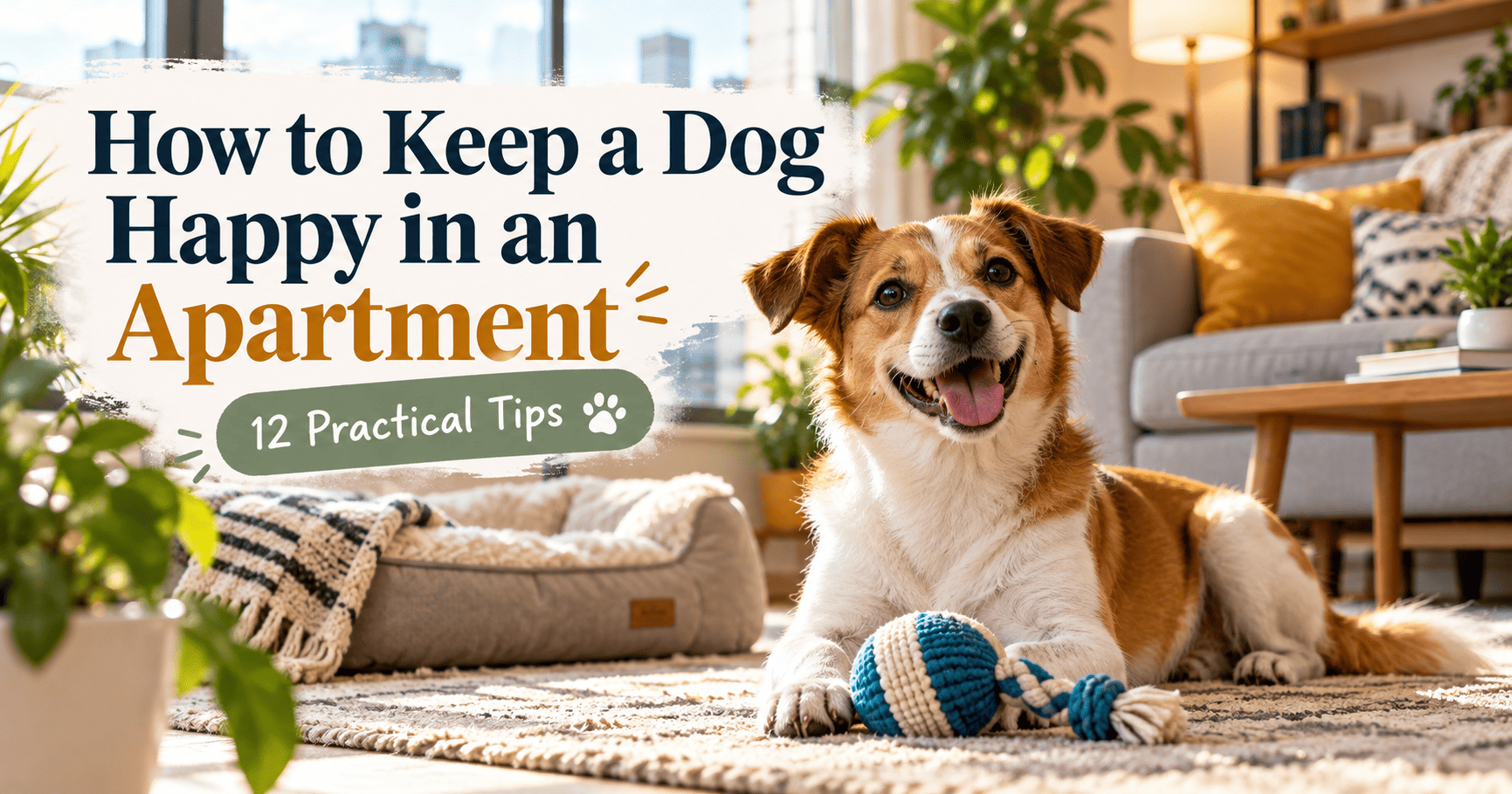
Wondering how to keep a dog happy in an apartment? The good news is that dogs do not necessarily need a big backyard to enjoy a fulfilling life. What they need is appropriate exercise, mental enrichment, predictable routines, comfortable resting spaces, and opportunities to behave like dogs.
Living in a smaller home does create challenges. There may be neighbors on the other side of the wall, elevators full of unfamiliar people, limited space for play, and no private yard for bathroom breaks.
But these challenges can be managed thoughtfully. Whether you share a studio with a Chihuahua or a larger apartment with a Labrador, the most important consideration is meeting your individual dog’s needs.
This guide covers 12 practical apartment dog care tips, including exercise, barking, enrichment, potty training, alone time, and space-saving essentials.
Quick Answer: Can Dogs Be Happy in Apartments?
Yes, many dogs can live happily in apartments when their physical, behavioral, social, and emotional needs are met.
Apartment suitability depends on more than size. Temperament, energy level, age, health, noise sensitivity, and the owner’s schedule can matter more than whether a dog is classified as small, medium, or large.
A calm large dog may adapt well to a compact home, while a small but highly active dog may require substantial daily exercise and enrichment.
The goal is not simply to tire your dog out. It is to create a healthy balance of movement, exploration, learning, companionship, and rest.
12 Practical Tips for Raising a Happy Apartment Dog
1. Build a Consistent Daily Routine
Predictability is especially helpful when your dog depends on you for nearly every outdoor opportunity.
Try to organize the day around regular bathroom breaks, meals, walks, training, relaxation, and sleep. You do not need to follow an inflexible timetable, but a recognizable rhythm can help your dog understand what to expect.
For example, your dog might enjoy a morning walk, a midday bathroom break, an afternoon enrichment activity, and a calmer evening outing.
Puppies, senior dogs, and dogs with medical needs may require more frequent breaks than healthy adults.
Apartment tip: Keep leashes, waste bags, treats, and a towel near the exit to make outdoor trips easier.
2. Prioritize Outdoor Exercise
Apartments often have limited space for running, which means outdoor activity becomes particularly important.
How much exercise your dog needs depends on age, breed tendencies, fitness, medical conditions, and individual behavior.
A young athletic dog may enjoy longer walks and active play, while an older dog with mobility limitations may need gentler, shorter outings.
Rather than measuring success only by distance, look at how your dog responds. Appropriate activity should support comfortable movement and recovery without leaving the dog exhausted, painful, or distressed.
For more detailed guidance, read our guide to how much exercise a dog needs.
3. Make Walks Interesting With Sniffing
Not every walk needs to be a fast-paced workout.
Dogs explore their surroundings through scent. Giving your dog appropriate opportunities to sniff grass, trees, and interesting outdoor areas can make familiar neighborhood walks more engaging.
Try alternating ordinary walking with slower exploration periods.
For example, take a short route through a quiet park, allow some supervised sniffing, then practice a few simple cues before heading home.
Choose areas that are safe and permitted for dogs, and avoid letting your pet investigate trash, harmful substances, or unknown food.
Apartment tip: A relaxed sniffing walk can be useful when vigorous indoor play would disturb the neighbors.
4. Add Mental Enrichment to Mealtimes
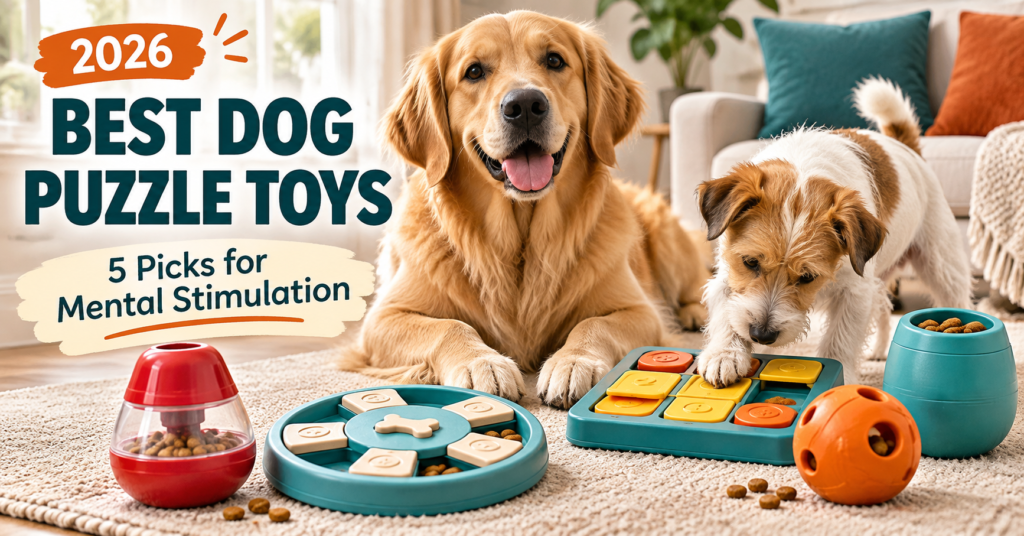
One of the easiest ways to make apartment living more interesting is to turn some meals into gentle problem-solving opportunities.
Depending on your dog’s preferences, consider:
- Slow feeder bowls.
- Food puzzles appropriate for the dog’s skill level.
- Stuffable rubber toys.
- Snuffle mats.
- Simple supervised food-search games.
These activities encourage exploration and engagement without needing a large playing area.
Start with an easy challenge and gradually increase difficulty. A puzzle that repeatedly frustrates your dog is not necessarily beneficial.
Use part of the dog’s usual food allowance when possible, rather than adding unlimited extra treats. Choose toys appropriate for chewing habits and supervise until you know how your dog uses them.
See our comparison of slow feeder bowls for dogs for additional feeding-enrichment ideas.
5. Create a Comfortable Resting Zone
Even a small apartment should offer your dog a reliable place to rest.
This could be a properly sized dog bed, a quiet corner with a washable mat, or an appropriately introduced crate that the dog voluntarily enjoys.
Avoid placing the resting area directly beside a noisy entrance or heavily traveled walkway when possible.
Consider the dog’s physical needs. Senior dogs and dogs with mobility limitations may benefit from supportive bedding and surfaces that are easy to access.
A resting area should not become a punishment location. Encourage positive associations with calm praise, rewards, and predictable quiet time.
For older pets, explore our orthopedic dog bed comparison.
6. Address Barking Without Punishment
Barking is a normal form of canine communication, but frequent barking can create problems when several households share walls and hallways.
The first step is understanding why it happens.
Some dogs bark at footsteps outside the door. Others react to movement through a window, become excited when visitors arrive, or vocalize when frightened or left alone.
Different causes require different responses.
- Hallway sounds: Reward calm behavior and practice with low-intensity sounds.
- Window triggers: Consider curtains or moving the dog’s resting area away from the window.
- Visitor excitement: Teach your dog to settle on a mat away from the entrance.
- Boredom-related barking: Review the dog’s exercise, engagement, and daily routine.
- Distress-related barking: Investigate anxiety and seek appropriate professional guidance.
Avoid yelling at your dog or relying on devices that cause pain or fear. Reward-based training offers a more welfare-conscious approach.
Important: If barking occurs mainly when your dog is left alone, investigate potential separation-related distress rather than assuming the dog is simply bored.
7. Teach Your Dog to Relax When Alone
Apartment dogs should gradually learn that short, safe periods of separation can be ordinary parts of daily life.
Start with manageable absences while your dog remains comfortable, then gradually build duration based on their response.
Some dogs may settle with familiar surroundings and an appropriate enrichment activity. Others need a carefully designed training plan.
Watch for signs of distress, including persistent vocalization, pacing, destructive escape attempts, excessive drooling, or elimination associated with departures.
These symptoms can indicate separation-related anxiety, which should not be treated as disobedience.
If your dog shows significant distress, speak with your veterinarian or a qualified reward-based behavior professional. Severe separation anxiety requires more than simply providing additional toys.
A pet camera may help you observe what happens when you leave, but it cannot diagnose anxiety or replace professional care.
8. Make Potty Breaks Easy and Predictable
Bathroom routines can be one of the trickiest parts of apartment dog ownership, particularly in high-rise buildings.
Puppies often need frequent opportunities to eliminate, especially after waking, eating, drinking, and playing.
Adult dogs benefit from reliable outdoor access, while seniors or dogs with medical conditions may need adjustments.
Plan for the time it takes to reach the elevator, lobby, and designated outdoor area.
During initial training, reward successful bathroom behavior promptly and avoid punishing accidents.
Some households use indoor potty stations or grass patches as part of a carefully planned routine. These can be useful in specific situations, but they should not be viewed as a universal replacement for appropriate outdoor opportunities.
Clean accidents thoroughly with a pet-safe enzymatic cleaner, and contact your veterinarian if a previously house-trained dog suddenly begins having accidents.
9. Practice Calm Elevator and Hallway Manners
Apartment dogs often encounter neighbors, other pets, carts, delivery workers, and unfamiliar noises in relatively narrow spaces.
Basic training can make these situations easier.
Useful skills include:
- Responding to their name.
- Walking on a loose leash.
- Waiting briefly at doors.
- Returning attention to the handler.
- Moving calmly past distractions.
- Settling beside the owner.
Practice initially in quiet conditions and reward desirable behavior.
When meeting other dogs, provide enough distance to keep your dog comfortable. Avoid assuming every hallway encounter should involve a greeting.
For owners of bigger dogs, our large-dog harness comparison explains different fitting and leash-control options.
10. Use Quiet Indoor Games
Apartment enrichment does not need to involve bouncing balls, loud squeaky toys, or repeated running across hard floors.
Consider quieter activities such as:
- Finding a few hidden pieces of kibble in a safe area.
- Practicing touch, sit, stay, and other familiar cues.
- Learning a simple new trick.
- Using an appropriate lick mat under supervision.
- Exploring a beginner-level food puzzle.
- Practicing a calm settle-on-a-mat routine.
Place toys on a stable surface and use nonslip mats when appropriate.
Keep activity suitable for the dog’s fitness and avoid repetitive jumping or fast turns on slippery flooring.
Short, enjoyable sessions can be especially useful for dogs that get mentally restless between outdoor trips.
11. Keep Your Apartment Safe and Organized
Limited space makes organization particularly valuable.
Store food securely, keep medications and household cleaners inaccessible, and remove small objects that might be swallowed.
Use cord covers or secure cables if your dog chews on household items.
If you live above ground level, make balconies and open windows a priority safety consideration. Never leave a dog unsupervised on an unsecured balcony, and do not rely on an ordinary insect screen to prevent falls.
Choose washable bedding, accessible water bowls, and storage containers that fit your available space.
For senior dogs, consider nonslip flooring and appropriate mobility aids if your veterinarian recommends them.
Our guide to ramps for senior dogs explains options for beds, sofas, and vehicle access.
12. Adjust the Routine as Your Dog Changes
Your dog’s needs will not remain identical throughout life.
A puppy may require additional socialization, frequent potty breaks, and careful rest periods.
An energetic adolescent may need structured training and more opportunities to explore.
A senior dog may benefit from shorter outings, easier access to resting spots, and closer attention to mobility or toileting changes.
Watch for meaningful behavior changes, such as reduced enthusiasm for walks, difficulty settling, unusual barking, appetite changes, or new house-soiling problems.
These can reflect training challenges, environmental stress, or medical concerns. Persistent or sudden changes deserve veterinary attention.
The best apartment routine is one you can realistically maintain while meeting your dog’s changing needs.
Example Daily Routine for an Apartment Dog
Every dog is different, but the following sample routine illustrates how physical exercise, enrichment, bathroom opportunities, and rest can fit into apartment life.
| Time of Day | Suggested Activity | Purpose |
|---|---|---|
| Morning | Bathroom break, outdoor walk, breakfast | Movement, exploration, and a predictable start |
| Midday | Bathroom opportunity and a short interaction | Comfort and a break in the routine |
| Afternoon | Quiet puzzle, scent game, or brief training | Mental enrichment |
| Evening | Appropriate walk, play, and dinner | Physical activity and companionship |
| Before Bed | Bathroom break and quiet wind-down | Comfort and rest |
This is an example, not a universal schedule. Adapt the frequency, duration, and intensity to your dog’s age, health, individual needs, and veterinary advice.
Useful Essentials for Apartment Dogs
You do not need to fill a small apartment with expensive pet products. Start with equipment that addresses genuine needs.
- Comfortable walking gear: A well-fitting harness or collar and an appropriate leash for safe outdoor trips.
- Supportive resting space: A bed or mat sized for your dog and easy to clean.
- Food enrichment: A suitable slow feeder, food puzzle, or stuffable toy.
- Waste cleanup supplies: Bags, pet-safe cleaning products, and convenient storage.
- Nonslip surfaces: Helpful where hard floors make movement difficult.
- Pet barriers when needed: Properly installed gates or pens for supervised management and safe separation of spaces.
- Water access: Clean, accessible drinking water throughout the day.
Choose items based on your dog’s size, chewing style, mobility, and habits. Introduce new products gradually and supervise when appropriate.
Remember that equipment supports good care; it does not replace walks, social contact, training, or veterinary attention.
Common Apartment Dog Care Mistakes
- Assuming a small dog needs very little exercise. Activity requirements vary widely among individuals.
- Replacing all outdoor activity with indoor toys. Dogs still benefit from safe opportunities to explore outside.
- Ignoring the reason for barking. Fear, excitement, boredom, and separation distress are different issues.
- Using punishment for house-training mistakes. Reward successful behavior and investigate recurring problems.
- Choosing a breed by size alone. Temperament, energy, grooming needs, and the owner’s lifestyle matter.
- Overlooking the building environment. Elevators, shared corridors, neighbors, and lease restrictions all affect daily life.
Signs Your Apartment Dog May Need a Routine Change
Some changes in behavior can suggest that your dog’s current routine is not working well.
Examples include frequent restlessness, persistent barking, difficulty settling, repetitive destructive behavior, unusual reactions to ordinary sounds, or reluctance to participate in activities previously enjoyed.
However, these signs do not automatically mean your dog needs more exercise.
Pain, medical illness, anxiety, insufficient rest, or environmental stress may produce similar changes.
If a behavior is sudden, persistent, severe, or accompanied by physical symptoms, consult your veterinarian before assuming it is purely a training problem.
Frequently Asked Questions About Apartment Dogs
Can a large dog live happily in an apartment?
Yes. Some large dogs adapt well to apartment living when their exercise, enrichment, comfort, and social needs are met. Temperament and daily routine are more informative than size alone. Building restrictions and available outdoor access should also be considered.
How much exercise does an apartment dog need?
There is no single amount suitable for every dog. Age, breed tendencies, physical condition, health, and activity preferences all matter. Ask your veterinarian about safe exercise limits if your dog is very young, senior, overweight, or has a medical condition.
How do you keep an apartment dog entertained?
Combine appropriate outdoor exercise with food puzzles, scent games, short training sessions, safe chewing activities, and opportunities to rest. Rotate activities based on your dog’s interests rather than assuming constant stimulation is necessary.
Are small dogs always better for apartments?
No. Small size does not automatically mean low energy or quiet behavior. Some larger dogs have relatively calm lifestyles, while certain small dogs need substantial exercise and mental engagement. Match the dog’s individual characteristics to your living situation.
How can I reduce my dog’s barking in an apartment?
Start by identifying the trigger. Reward calm behavior, reduce unnecessary exposure to stressful sights or sounds, and provide appropriate exercise and enrichment. If the barking is related to fear or separation anxiety, consult a qualified professional rather than using punishment.
Can dogs stay home alone in an apartment?
Many dogs can learn to remain comfortable during appropriate periods alone, but tolerance varies significantly. Puppies, seniors, and dogs with medical or behavioral needs may require more frequent care. Persistent distress when alone calls for an individualized plan.
Do apartment dogs need a crate?
Not necessarily. Some dogs enjoy a positively introduced crate as a resting space, while others do well with a bed or safely managed room. A crate should not be used as a punishment or as a substitute for appropriate activity, social interaction, and bathroom opportunities.
Final Thoughts: Small Space, Good Quality of Life
A happy apartment dog does not need an enormous home. What matters most is a routine that supports movement, exploration, appropriate mental activity, comfortable rest, and positive interactions.
Start with the essentials: regular bathroom access, enjoyable walks, opportunities to sniff and learn, a safe place to relax, and a plan for managing common apartment challenges.
Pay attention to your dog’s behavior and make adjustments when needed.
With thoughtful daily care, apartment living can be a comfortable and rewarding experience for dogs of many sizes.
Sources and Further Reading
- American Kennel Club — Moving to an Apartment? How to Prepare Your Dog
- American Kennel Club — How to Potty Train a Dog in an Apartment
- American Kennel Club — Indoor Dog Training and Mental Stimulation
- American Kennel Club — Best Dogs for Apartment Dwellers
- ASPCA — Separation Anxiety in Dogs
- American Veterinary Society of Animal Behavior — Humane Dog Training
Fit For Your Dog Editorial Team | Research-based educational guide | Updated October 2026